
Buying a home is the biggest financial decision for most Indians, but choosing the right interest rate type is just as critical. When you apply for a home loan, banks offer two choices: Fixed Rate or Floating Rate. Which one saves you more money?
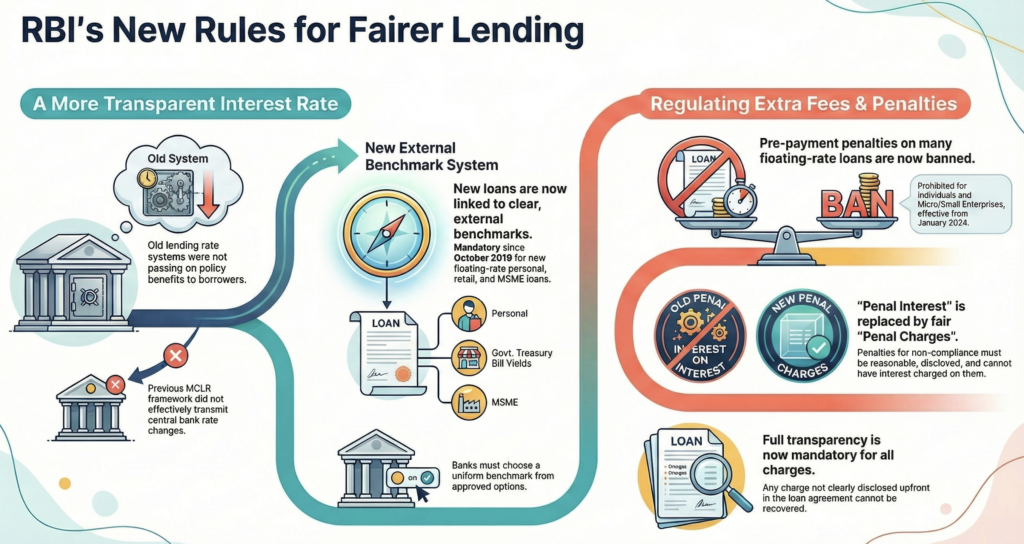
1. Floating Interest Rate This rate is linked to the RBI’s Repo Rate (external benchmark). If the RBI cuts rates, your EMI goes down. If rates hike, your EMI increases.
- Pros: Generally 1-2% cheaper than fixed rates initially. No penalty for pre-payment or foreclosure.
- Best For: Borrowers who expect interest rates to fall or remain stable in the long run.
2. Fixed Interest Rate Your interest rate remains constant for a specific tenure or the entire loan duration, regardless of market fluctuations.
- Pros: Predictable EMIs. Immunity against market volatility.
- Best For: Borrowers who have a tight monthly budget and cannot afford a sudden increase in EMI.
** The Verdict:** Most financial experts suggest Floating Rates for long-term loans (15-20 years) because they are historically cheaper. However, if market rates are at an all-time low, locking in a Fixed Rate might be smart.
The “Easy Rate Loans” Advantage: Banks rarely advertise their “spread” (the margin they keep above the Repo Rate). At Easy Rate Loans, we compare the spread across SBI, HDFC, ICICI, and 20+ other lenders to ensure you aren’t paying a hidden premium.
Don’t guess with your EMI. [Click here to compare Fixed vs. Floating rates] from top banks specifically for your profile today.